
What should myeloma patients consider as they recover from CAR T-cell therapy? Dr. Rebecca Silbermann discusses the importance of understanding what to expect during recovery, the role of movement and exercise, and why it’s important to give yourself grace throughout the process.
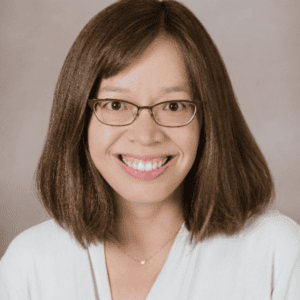
Dr. Rebecca Silbermann is an Associate Professor of Medicine and the Clinical and Research Head of the Multiple Myeloma Program at Oregon Health & Science University. Learn more about Dr. Silbermann.
Related Resources

Transcript
Katherine Banwell:
Dr. Silbermann, recovery after CAR T-cell therapy can take time. What should patients know about giving themselves grace during the recovery process?
Dr. Rebecca Silbermann:
Many patients learned very well what recovery would look like post-stem cell transplant. And I think that we, as a community, have done a pretty good job of messaging what that can look like. I actually think that while CAR T is not as intensive as transplant, the recovery can look quite similar.
And the same ruler that a patient sets out for themselves that it may take a good three months, six months, to really feel like themselves after transplant, I think that that’s a reasonable thing to keep in mind following CAR T. And then, it’s great to be surprised if something goes more easily than what they had expected.
Katherine Banwell:
So, if somebody is experiencing fatigue, for instance, how do they deal with that? How do they give themselves grace, rather than – we can be so hard on ourselves and say, “I’m tired of being tired.” Is it a different mindset after CAR T-cell therapy, in terms of how a patient is feeling?
Dr. Rebecca Silbermann:
I don’t know if it has to be a different mindset. I think it’s very, very individual. Some people, when they feel poorly, their inclination is to power through it. Some people, when they feel poorly, are more prone to curl up in the corner of the couch underneath a fuzzy blanket. There is data that suggests that if people are able to physically move even a little bit, that’s extremely beneficial, and it really pays dividends if they can get up, put on proper shoes, go for a little bit of a walk, and just start to move.
I think keeping that in mind, and recognizing that a little bit of movement, as well as thinking about their nutrition, really is part of their recovery, is very important. But at the same time, it’s okay to ask for help.
And it’s okay to let your caregivers know if you are recognizing that there are things that are more challenging for you, even if it’s been quite some time after the CAR T procedure.
Katherine Banwell:
Dr. Silbermann, what is one thing you want every patient considering or recovering from CAR T-cell therapy to remember?
Dr. Rebecca Silbermann:
We have done so many wonderful things in myeloma, and we have seen remarkable, remarkable progress in how well many patients do after different types of treatment. We haven’t figured out how to make that happen for everyone. And every time we choose a treatment, it’s a conversation with the physician, the patient, their caregivers, to figure out what seems like the best choice for that individual, and that individual’s condition. And sometimes, things don’t work out the way that we want them to.
And that doesn’t mean the patient or the caregiver has done something wrong. I think that patients, particularly myeloma patients, are so well educated, and they’re so generally committed to doing everything they can to get the best possible outcome, that they feel like they’ve done something incorrectly, or their caregiver may take it personally if something happens, if someone has to go to emergency. And that’s not the case. Stuff happens. And we are doing the best we can to try to guide people through this, but it’s not your fault. None of this is something that an individual patient brought on, or that they could’ve necessarily chosen a different way to prevent.
Katherine Banwell:
This is something that they don’t have control over.
Dr. Rebecca Silbermann:
I think so. I think so. They do the best they can, and we all try to work together to get to our goal.