
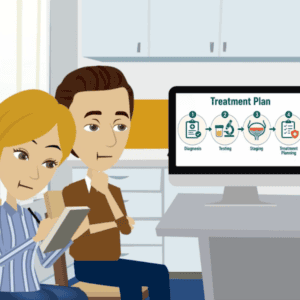
Bladder cancer care is a team effort, with a group of different medical experts and specialists who work together to coordinate care and support. In this animated video, a nurse and patient provide an overview of the healthcare team members, explain each person’s role in bladder cancer care, and share advice for collaborating with your clinicians so you can take an active role in your care.
Related Resources

Transcript
Jessica:
Hi, I’m Jessica, and I’m a bladder cancer nurse practitioner. And this is Robert, who is living with bladder cancer. Thanks for joining us!
Robert:
Hi! We’re so glad you’re here. In this video, we’re going to walk you through the members of your bladder cancer healthcare team—and share tips for communicating more effectively. Jessica, who are the members of the team exactly?
Jessica:
Well, there are many different people who may be involved with your bladder cancer care:
- Let’s start with a urologist. This is a type of doctor who specializes in diseases of the urinary tract and can perform procedures and surgeries used to diagnose and treat bladder cancer. Some urologists are also specially trained in cancer care and are known as urologic oncologists.
- Then there may be a medical oncologist who is focused on treating cancer with medications, such as chemotherapy, immunotherapy, and other drug treatments.
- There could also be a radiation oncologist. This doctor has expertise in using radiation to treat cancer.
- And, finally, your primary care doctor should also be kept informed about your diagnosis and treatment plan.
Robert:
Right—my doctor was in the loop throughout my bladder cancer care—which was especially important because I had other health issues we were managing at the same time.
And, beyond your doctors, there is a team of professionals to support you along the way. For instance:
- A nurse, like Jessica, can provide information so you can better understand your treatment options, answer questions, and offer tips for managing everyday challenges.
- And, if your bladder cancer care requires a urostomy, which is a surgery that creates a new path for urine to exit the body, wound and ostomy nurses can help you learn how to care for the stoma and manage the pouch.
- Then, a social worker can address many of the practical challenges of care, including financial assistance, transportation, support groups and other resources for you and your family.
- And last, but certainly not least, mental health professionals can help you manage your emotional well-being. A counselor or therapist can provide care to cope with stress, and anxiety throughout your cancer journey.
Jessica:
That’s right, Robert. And, depending on your treatment plan, you may also work with a dietitian, physical therapist, or palliative care specialist. They can assist you with nutrition, recovery, and quality-of-life concerns.
And, most importantly, a care partner is an essential member of your team. Whether it’s a friend or family member, having someone to talk through your treatment options with can make a big difference.
Robert:
That’s such a great point, Jessica! In addition to her many other tasks, my wife attended appointments and participated in the discussion. Communication is so important and care partners can make a big impact. Jessica, can you share some tips for talking with your doctor?
Jessica:
Of course!
- First, make sure everyone on your team understands your care goals and what matters most to you.
- Next, ensure you have access to your patient portal. There you can review your health information and use secure messaging tools to reach your healthcare team and ask follow-up questions when needed.
- And, bring someone to appointments to take notes, so that you remember important information. And don’t hesitate to ask for written summaries or visit notes to review later.
- You should also keep your team informed about symptoms, treatment side effects, urinary changes, or any challenges that affect your quality of life.
- Finally, it’s essential to speak up during appointments. Your team wants to hear your questions and understand how you are doing. The more they know, the better they can tailor your care plan to your needs.
Robert:
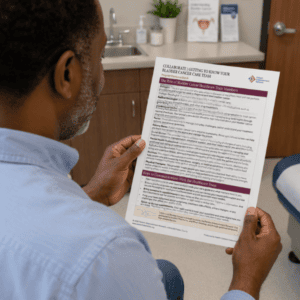
Thank you for joining us—we hope you feel more empowered! And remember to download the guide that accompanies this video to review what we’ve discussed.
And visit powerfulpatients.org/bladder-cancer to access resources and videos designed to help you navigate your bladder cancer journey.