Why should non-melanoma skin cancer patients participate in their care decisions? Expert Dr. Barbara Ma explains the shared decision-making process, provides support resources and discusses the important part care partners play in patient care.
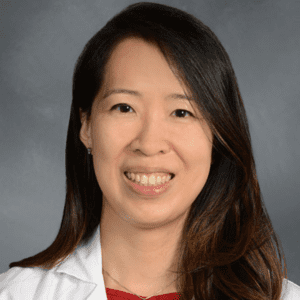
Dr. Barbara Ma, is Cutaneous Oncologist and an Assistant Professor of Medicine at Weill Cornell Medicine and an Assistant Attending Physician at New York Presbyterian Hospital. Learn more about Dr. Ma.
Related Resources

Transcript
Jamie Forward:
So, Dr. Ma, how do you define shared decision-making and why is it so important for patients to engage in their care decisions?
Dr. Barbara Ma:
I think patients can advocate for themselves best when they understand and know more about their diagnosis and also learn more about the potential treatment plans. So, when we talk about shared decision-making – let’s say that there is a non-melanoma skin cancer that is on the face somewhere – which is cosmetic, sensitive, you want to have a good cosmetic outcome, as well.
And to do that, you would benefit from the shared expertise from all your team members that are taking care of your non-melanoma skin cancer. So, I think that when patient is informed, they’re also best able to advocate for themselves and have a really great understanding of their treatment plan when they talk with their multidisciplinary team members.
Jamie Forward:
Yeah. And what about the role of the care partner? How can a care partner participate in this and make an impact, really?
Dr. Barbara Ma:
I think caregiver and family support is also very important. Sometimes, when we deal with a new diagnosis, for even something as highly treatable as non-melanoma skin cancer, it is something that is a journey that requires support from all sides. Not only physical, but also mental and caregiver and family support is essential for that. I also think it’s helpful for the patient if they have another ear to listen to all these things. Because sometimes it can feel overwhelming to have so much information, and all the possibilities. So, a caregiver’s another advocate for the patient, and can also help in the shared decision making.
Jamie Forward:
Great. So, Dr. Ma, when should patients consider seeking a second opinion?
Dr. Barbara Ma:
I think that patients should trust their team. And if there’s something that they feel uncomfortable about or have some additional questions, and they just need that confirmation, then that’s when they should seek a second opinion.
Jamie Forward:
Okay. And of course, people worry about – following a cancer diagnosis – they worry about recurrence or just the anxiety around having cancer – what do you recommend from an emotional standpoint? Are there support and resources available for people with non-melanoma skin cancer?
Dr. Barbara Ma:
Yeah, so, I think patients really benefit from not only their family support group but also chatting with other people who’ve been through it. Again, it is highly treatable when caught early. And there are’s lots of different treatment options. And there are support groups, and actually there are different foundations.
Actually, even the cutaneous groups that you may have heard about – Melanoma Research Alliance, Melanoma Research Foundation, AIM – they all also have mini support groups within those different associations. That’s something that could be a resource for patients to learn more about their diagnosis but also reach out to others and, if they so desire, to have many community. Yeah.
Jamie Forward:
Sure. And, of course, we know that being proactive in your care is really important. So, how do you sort of advise someone, or what would you say to someone that feels like they’re not being heard when they’re discussing their care with their healthcare team?
Dr. Barbara Ma:
Sure. So, I think everyone wants the best for the patient.
But if they are not feeling heard, then that definitely needs to be brought up to the team that’s taking care of them. So, I would say be proactive in the communication. There are some patient advocacy groups, also, if they feel that that’s another way to get another perspective or bring another perspective, to provide their own opinion, and to bring that feedback to their team, I think that would also be important.