
In this EPEP podcast, Dr. Gabriela Hobbs, Clinical Director of the Leukemia Service at Massachusetts General Hospital and Associate Professor of Medicine at Harvard Medical School, examines the clinical gray areas of MPN progression, including discordance between symptoms and molecular risk. She also discusses treatment timing and approaches to communicating evolving risk without creating unnecessary anxiety.
Related Resources


Transcript
Dr. Nicole Rochester:
Hello, I’m Dr. Nicole Rochester, and welcome to this Empowering Providers to Empower Patients (EPEP) Patient Empowerment Network podcast.
As MPNs evolve, providers must interpret changing symptoms, laboratory patterns, and molecular insights to guide treatment timing and long-term planning. These transitions can be clinically complex and emotionally challenging for patients.
Joining us today is Dr. Gabriela Hobbs, Clinical Director of the Leukemia Service at Massachusetts General Hospital and Associate Professor of Medicine at Harvard Medical School in Boston, Massachusetts.
Gabby, thank you so much for joining us today.
Dr. Gabriela Hobbs:
Thank you, it’s great to be here.
Dr. Nicole Rochester:
So, Gabby, disease evolution in MPNs is often gradual and not always captured by a single marker. In your clinical practice, how do you synthesize changing symptoms, laboratory patterns, and molecular insights to distinguish true disease evolution from expected variability.
And how does that judgment influence treatment timing, patient counseling and the use of precision-guided strategies?
Dr. Gabriela Hobbs:
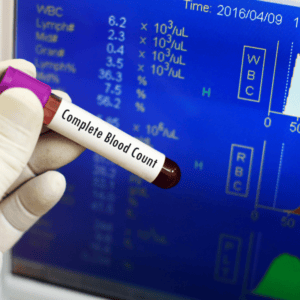
All right, lots to unpack there. So, exactly like you mentioned, Nicole, usually, one laboratory value does not equate to disease progression. I mean, sometimes, certainly it does, but if there’s some change in the CBC, for example, that really doesn’t mesh with what I saw last time. Before jumping to any conclusion, I think the most important thing is to repeat that in short intervals.
Unless it’s a situation where it’s obvious, you know, progression to acute leukemia, and there’s tons of blasts in the circulating blood, or something like that, where you really can’t wait. Oftentimes that’s not the case. Oftentimes, you know, we’ll see a jump in the platelet count that can sometimes be explained by, you know, a recent infection or something along those lines, and so I would say.
A single laboratory test usually doesn’t equate disease progression, and so I think important to educate the patient about that and repeat, repeat the test. And then similarly, one of the things that patients get very confused about, because there’s a lot of mixed messaging out there also is, you know, what happens with symptoms? You know, so sometimes patients have some symptoms that they didn’t have previously, and they worry that if they have those symptoms, then that means all of a sudden that they have disease progression, and the truth is that many times patients can develop symptoms, and that has nothing to do with disease progression.
And so, listening to the symptoms and making sure that you’re doing what you can to manage those symptoms is important, but also educating the patient that having symptoms and symptoms that actually can change over time is part of the disease.
Now, that being said, you know, being able to synthesize all the information of the patient to really actually recognize when a patient is progressing, I think, is really important. We don’t make a decision about progression based on one laboratory finding. But if we repeat those tests, and the trend continues, really, the trend is really what matters here.
And if along those lines, the patient is actually developing some specifically concerning symptoms like fevers, night sweats, bone pain, those kinds of things are things that start to alert me of progression, perhaps and then you integrate molecular changes, so…you know, when I meet a patient, I usually get genetic testing and if I have a patient that has changing blood counts, counts are getting worse, maybe they’re developing cytopenias, maybe they have more of the symptoms, and then their genetic testing shows a change, like, let’s say they only had a JAK2 mutation, and now they’ve acquired a new mutation.
All of those things together are starting to paint a story, but again, it’s not usually one time point, it’s usually a combination of different things that are coming together.
Dr. Nicole Rochester:
Thank you, Gabby. You’re right, that was a lot to unpack, and I think that your explanation of how you incorporate all of those different varieties of information is incredibly helpful.
How does that influence the counseling that you provide to patients, and maybe the education that you provide to patients about their disease?
Dr. Gabriela Hobbs:
Thanks, Nicole. So, I think the counseling kind of goes in line with what I had sort of mentioned previously, and I do that a lot in clinic, so, you know, a patient will come in, and we see a CBC result that is not something that the patient really wanted to see. I think counseling the patient about the meaning of, one, CBC is really important.
And along those lines, you know. counseling them on what their symptoms may be, and if we think that they’re concerning, you know, so I think sometimes patients come in with a lot of fatigue, but they also have a lot on their plate.
And maybe they have a new diagnosis, or a new loved one that’s sick, or something along those lines. So I think a lot of it is just counseling about, you know, you may be feeling more fatigue, but that maybe has nothing to do with your MPN. And so, although that’s an important symptom and important to recognize.
You also shouldn’t add more to your plate by being concerned about disease progression when it’s probably not related. And so I think an important part of what I do in clinic, really, is helping patients to tease out what’s important with a lot of the noise.
You know, even when looking at results together, they’re like, oh, but this one’s in the red, why is that one not important? It’s like, no, that one’s not important. And so, yeah, spending some time to recognize what’s, what’s, you know, making the patient anxious about their results, I think is important.
Dr. Nicole Rochester:
Absolutely. Eliminating the noise. I like how you worded that.
Dr. Gabriela Hobbs:
Eliminating the noise.
Dr. Nicole Rochester:
Yeah. How do you approach discordance between clinical symptoms and molecular risk?
Dr. Gabriela Hobbs:
That is a hard question. So, oftentimes I’ll meet a patient, and we’ll do their risk stratification.
And risk stratification says that this is a high-risk patient, and I follow that patient for a long time, and their disease remains stable. And so going back to education of the patient, really important to explain to a patient, you know, what’s their diagnosis, what does this mean, talking about risk, but also explaining that when we risk stratify a patient.
It’s just an estimate. It’s not a promise. And so, patients will sometimes act differently than what they’re “supposed to act” based on the risk scores. You know, these scores are limited, and so I think talking about that is important.
And sometimes patients will have symptoms that…or blood counts that actually don’t correlate with the molecular risk. Or they’ll have blood counts that are perfectly controlled, but still have symptoms. And so, I think understanding that all of these things don’t have to go together is really meaningful.
And, you know, if a patient has well-controlled blood counts, for example, but they still have symptoms, then that’s something that needs to be addressed. And so, for example, a patient may have well-controlled blood counts, but they’re still itchy, well, you know, what else can we do to optimize that? Is the itching actually just related to their polycythemia vera, for example, or is there something else going on?
And if there’s nothing else going on, then maybe we do have to increase the dose of, you know, the medication that we’re using to treat that symptom, even if the blood counts are well-controlled. And so recognizing, like I said already, that these things don’t always correlate with each other, I think is really important, to helping manage our patients.
Dr. Nicole Rochester:
I love how you said that the results are an estimate, not a promise.
And just your focus on the patient. I remember back in medical school, sometimes our professors would say, you know, the patient didn’t read the textbook. And it’s this idea that we have to treat the patient that’s in front of us, and not necessarily the labs.
Dr. Gabriela Hobbs:
Yeah, absolutely
Dr. Nicole Rochester:
And so I really appreciate you sharing that. How do you communicate evolving risk, without increasing patient or care partner anxiety?
Dr. Gabriela Hobbs:
Yeah, we’re not always going to succeed at that, but again, I think education and preparation goes a long way. And so, one of the interesting things about MPNs, for better or worse, is that disease progression doesn’t always happen quickly. And so, many times, you know, you start to see a change in blood counts, you start to see a change in symptoms, you start to see an increase in the spleen, and so you can start preparing the patient that this may be what’s happening.
But I think along the lines of preparing the patient, we also have to help explain to the patient what may happen if they actually progress.
And, you know, go to that dark place with the patient, so being like, okay, so the worst case scenario may be this. Okay, so what does that look like?
And educating the patient of what medications we have, what treatment options we have to help them feel reassured that even with disease progression, there are still going to be treatment options available. I think that that goes a long way.
Dr. Nicole Rochester:
I agree. Does your approach in this area change based on kind of the patient’s emotional readiness? You know, sometimes you have patients who want to know everything, and then sometimes you have patients who don’t necessarily want to know what’s coming up? How do you modify your communication, given that?
Dr. Gabriela Hobbs:
Yeah, that happens all the time, huh? And sometimes the patients that are the ones that I’m more worried about are maybe the ones that are less ready.
And the ones that are not progressing are the ones that want to know all the information. And so, yeah, definitely tailoring it to the patient, I think, is critical, and so for the anxious patient that’s not progressing, I think education and reassurance is important, but for the patient that is maybe not emotionally ready, but I do have something concerning, either trying to meet with that patient more frequently, and providing them information and small bits of information…in small bits, you know, that they can…that they can digest or absorb, I think is important.
And then, trying to enlist a caretaker, a family member, a friend, a relative, or somebody that may be important to that patient. You know, sometimes patients don’t come with a family member or a friend. And point blank, just asking, you know, I think I’d want to discuss something important at next visit, is there somebody that you want to bring with you?
It always helps to have a friend or an extra pair of ears to be able to, you know, hear things differently, or ask other questions, or remember things, or take notes, etc. So, I think being proactive about that is also important.
Dr. Nicole Rochester:
I completely agree. I think we often underestimate the importance of care partners and people who can support patients, so I really appreciate you sharing that. Well, that brings us to the end of this Patient Empowerment Network EPEP podcast.
Thank you so much, Gabby, for your valuable perspectives and insights. We hope today’s podcast helps providers treating patients and families facing an MPN to feel even more equipped to empower their patients in their MPN journey.
I’m Nicole Rochester. Thanks for listening.