
Collaborating with your healthcare team and engaging in your bladder cancer care is essential. This animated video explores how shared decision-making can help patients take an active role in their bladder cancer care – providing advice for asking questions, sharing your priorities, and partnering with your healthcare team to make treatment decisions that are right for you.
Related Resources

Transcript
Jessica:
Hi, I’m Jessica, and I’m a bladder cancer nurse practitioner. And this is Robert, who is living with bladder cancer.
Robert:
Thanks for joining us! In this video, we’re going to discuss the benefits of partnering with your healthcare team, and we’ll review steps to help you engage in your bladder cancer care.
Jessica:
That’s right, Robert. And one way this partnership happens is through “shared decision-making,” where you and your team collaborate on care decisions, to ensure YOU are at the center of those choices.
When you are living with bladder cancer, many factors need to be considered when choosing therapy. Your care team will consider details such as the stage and grade of your bladder cancer, whether it has invaded the bladder muscle, your overall health, and your personal goals and preferences.
Robert:
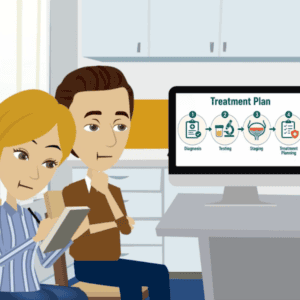
That’s right! When it was time to discuss my bladder cancer treatment plan, my doctor explained the different options, the potential benefits, risks, and how each could affect my daily life, including my bladder function. I asked questions, shared my priorities, and talked about what was most important to me. And I felt HEARD.
Jessica:
Exactly—that’s shared decision-making in action.
Robert:
Now that you know what shared decision-making IS, let’s review how you can play an active role in your care. The most important step is to educate yourself about your disease.
Jessica:
That’s right, Robert. Your doctor’s office can be a great source of information and resources, so it’s a good place to start. There are also advocacy groups that provide educational materials and support, including: [links on screen as they are read]:
- Patient Empowerment Network, the creator of this video.
- The Bladder Cancer Advocacy Network.
- And the American Cancer Society.
Robert:
Once you learn more about your bladder cancer, you will feel more empowered to voice your opinions – it’s important to speak up and ask questions at every stage of your care. Jessica, what other steps do you recommend?
Jessica:
- As always, make sure to bring a care partner, such as a friend or family member, to appointments and discuss your decisions with loved ones.
- Ask about how your type and stage of bladder cancer may impact your treatment choices, including the options for bladder preservation.
- Learn about your available therapies and discuss the potential risks and benefits of each option with your healthcare team, including how your urinary function may be affected.
- Inquire how each approach may affect your daily life, including your ability to work, travel, and maintain relationships.
- You should also make sure you understand and communicate your preferences before making any decisions.
- And, finally, remember YOU are at the center of your care. You should feel comfortable and confident with your treatment plan before moving forward.
Robert:
Now that you’ve watched this video, make sure to download the guide that contains important resources. You can print it out or save it on your computer to reference in the future.
And, visit powerfulpatients.org/bladder-cancer to access more videos with Jessica and me. Thanks for joining us!