
1. Look Beyond Blood Counts to Understand the Patient Experience
Laboratory results provide essential information about MPN management, but they do not always reflect how patients feel or function in everyday life.
Dr. Gabriela Hobbs emphasizes that patients classified as low-risk may still experience substantial symptom burden, including itching, night sweats, and fatigue, even when blood counts appear well controlled.
To better understand these experiences, Dr. Hobbs incorporates the MPN Symptom Assessment Form into routine visits, using a structured approach to identify symptoms that might otherwise go unreported.
She also encourages clinicians to distinguish MPN-related symptoms from other possible contributors, including emotional distress or coexisting health conditions.
Clinical takeaway: Incorporate routine symptom assessments, ask about quality of life, and investigate persistent symptoms even when laboratory findings appear stable.
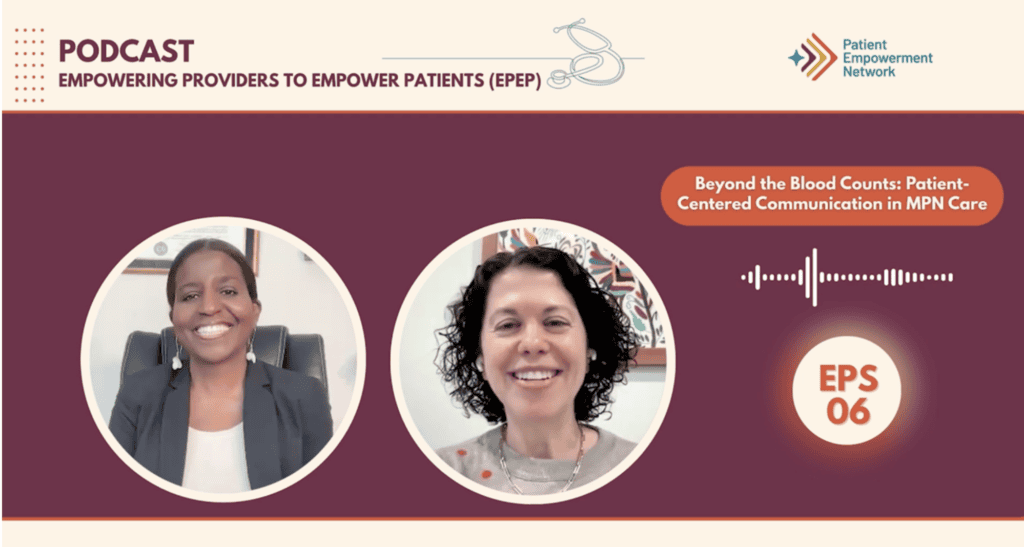
Hear from Dr. Hobbs: How can structured symptom assessments help uncover concerns that laboratory results may miss? Beyond the Blood Counts: Patient-Centered Communication in MPN Care
2. Make Complex Medical Information Easier to Understand
A patient’s ability to participate in treatment decisions depends partly on understanding their diagnosis, risk, and available options.
Dr. Hobbs notes that some patients live with an MPN diagnosis for years without fully understanding what the condition means. Medical terminology, unfamiliar genetic findings, and limited time during appointments can create additional barriers.
She recommends explaining concepts step by step, avoiding unnecessary jargon, and involving family members or care partners when appropriate and with the patient’s permission.
Another important consideration is how patients receive laboratory and genetic testing results. With information often released directly through patient portals, patients may encounter complex or concerning findings before discussing them with their healthcare team.
Dr. Hobbs recommends preparing patients for these results in advance and arranging opportunities to review their meaning.
Clinical takeaway: Use accessible language, consider individual health literacy and cultural context, and prepare patients for the possibility of receiving complex test results before discussing them with their healthcare team.
Watch Dr. Hobbs discuss how health literacy, cultural considerations, and unexpected genetic results can shape patient understanding: Beyond the Blood Counts: Patient-Centered Communication in MPN Care
3. Recognize Disease Evolution Without Relying on a Single Finding
Determining whether an MPN is progressing can require careful interpretation of changing symptoms, laboratory patterns, clinical findings, and molecular information.
Dr. Hobbs cautions against assuming that every unexpected laboratory result indicates disease progression. When clinically appropriate, repeating tests and evaluating trends over time can help distinguish meaningful changes from expected variability.
She also emphasizes that risk stratification tools offer estimates rather than definitive predictions.

For patients, understanding this distinction can help reduce confusion about risk scores and unexpected changes in laboratory findings.
At the same time, concerning patterns or findings may warrant prompt evaluation. Effective monitoring requires considering the full clinical picture rather than any one marker in isolation.
Clinical takeaway: Help patients understand that evaluating disease progression often involves considering laboratory trends, symptoms, molecular findings, and the broader clinical picture rather than relying on a single result.
Hear more from Dr. Hobbs: How can clinicians distinguish meaningful disease changes from expected variability? Recognizing Disease Evolution in Myeloproliferative Neoplasms
4. Balance Honest Conversations About Progression With ReassuranceBalance Honest Conversations About Progression With Reassurance
Discussions about MPN progression can be emotionally challenging, especially when patients face treatment escalation, changing symptoms, or uncertainty about the future.
Both experts emphasize the value of communicating openly while tailoring information to each patient’s emotional readiness.
Dr. John Mascarenhas recommends introducing the possibility of disease evolution early in the care journey, helping patients understand that their healthcare team will continue monitoring for meaningful changes and adjusting care as needed.
Dr. Hobbs similarly emphasizes providing information in manageable stages, particularly when patients are experiencing anxiety or are not ready to process complex discussions.
For some patients, more frequent conversations and the involvement of a trusted care partner may provide additional support.
Clinical takeaway: Discuss uncertainty without creating unnecessary fear. Tailor the timing, amount, and complexity of information to the patient, and offer opportunities for ongoing conversations as their needs evolve.
Explore the expert conversations: How do Dr. Hobbs and Dr. Mascarenhas approach uncertainty and emotionally difficult discussions? Guiding Patients Through Myeloproliferative Neoplasm Progression and Recognizing Disease Evolution in Myeloproliferative Neoplasms
5. Make Shared Decision-Making an Ongoing Conversation
Treatment decisions in MPN care may involve multiple options, competing priorities, and considerations that extend beyond clinical outcomes.
Dr. Mascarenhas emphasizes the importance of presenting available options, explaining potential benefits and toxicities, and allowing patients to share their preferences. He recognizes that patients may need time to consider their choices, speak with family members, and return with questions before making a decision.
This approach is especially important when discussing clinical trial participation.

Dr. Mascarenhas describes a deliberate process in which patients meet members of the research team, take informed consent documents home, and prepare questions for a subsequent discussion. He emphasizes that patients should never feel pressured or coerced into participating.
Clinical takeaway: Present treatment choices transparently, invite patients to express their goals and concerns, and allow time for informed decisions whenever clinically appropriate. Shared decision-making is a continuing process, not a single conversation.
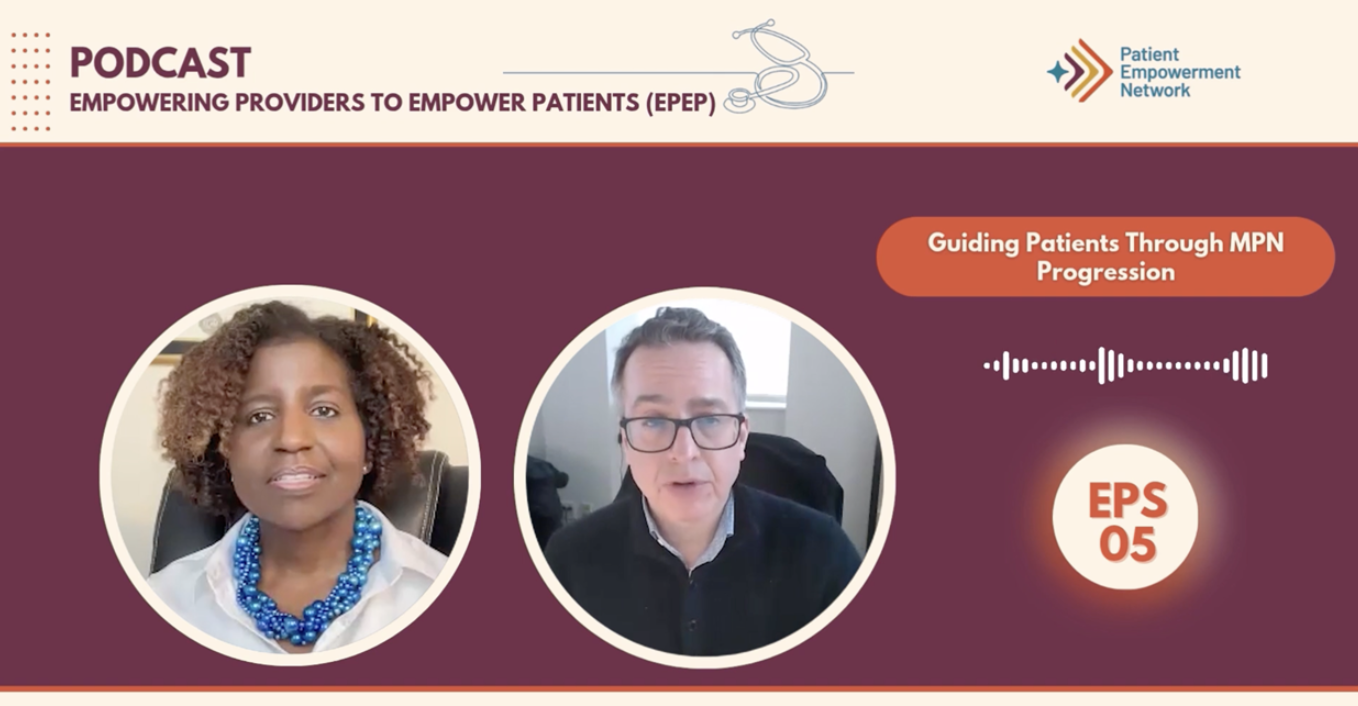
Hear from Dr. Mascarenhas: How can clinicians guide treatment decisions while preserving patient autonomy? Guiding Patients Through Myeloproliferative Neoplasm Progression
Continue the Conversation: Explore PEN’s MPN EPEP Resources
From understanding symptom burden to communicating disease progression and navigating treatment decisions, patient-centered MPN care requires thoughtful communication and an appreciation of each patient’s individual needs.
In PEN’s MPN EPEP expert interviews, Dr. Gabriela Hobbs and Dr. John Mascarenhas share real-world clinical perspectives and practical approaches to strengthening patient-provider communication and shared decision-making.
Explore the expert interviews:
Healthcare Professional Resource Guides
With expert interviews available in English and Spanish, along with accompanying provider resource guides, PEN’s EPEP initiative offers accessible educational resources to support more informed, equitable, and individualized MPN care.
Explore the MPN EPEP resources and discover strategies to empower your patients at every stage of their care journey.